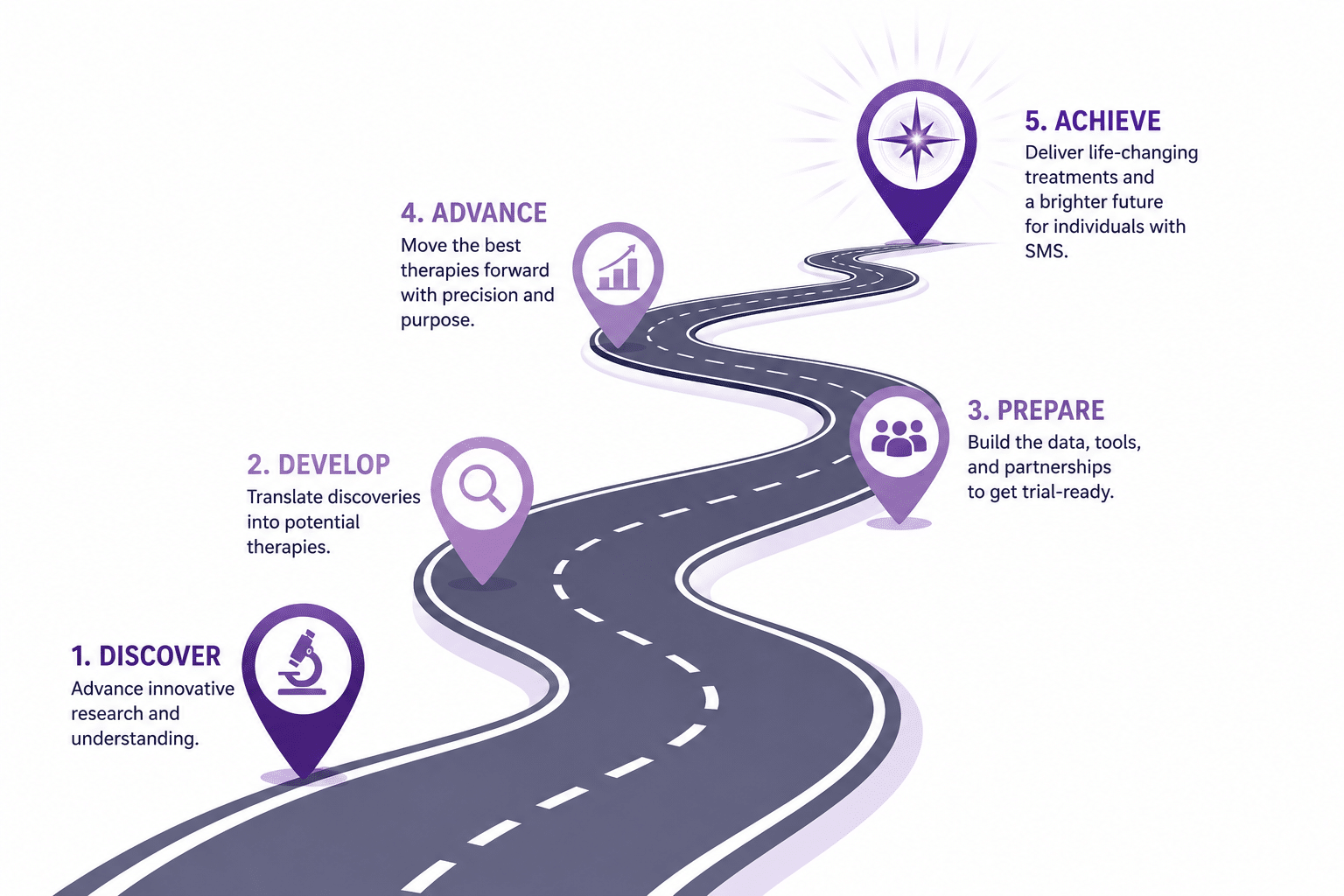
SMS Research Foundation’s goal is to help enable a first in-human syndrome-modifying clinical trial for Smith-Magenis Syndrome (SMS) by approximately 2030.
For the first time, this goal appears achievable. Researchers have identified a clear biological target—RAI1 (Retinoic Acid Induced 1). This is a gene that plays a critical role in brain development and helps regulate the activity of many other genes involved in sleep, behavior, learning, cognition, and metabolism. SMS occurs when there is not enough functional RAI1 activity, usually because one copy of the RAI1 gene is missing or altered. Studies have shown that restoring RAI1 activity can improve key disease-related features in animal models.
At the same time, advances in gene regulation, RNA biology, CNS delivery, biomarkers, and rare disease drug development are creating opportunities that did not exist just a few years ago.
But scientific promise alone is not enough.
To move from discovery to clinical development, the SMS field must build the infrastructure, partnerships, and translational programs needed to support future trials. That means recruiting leading scientific experts, funding milestone-driven research, strengthening patient registry and natural history efforts, developing biomarkers and outcome measures, and preparing for the regulatory and operational requirements of clinical studies.
Our 5-Year Roadmap is designed to help make that happen. By aligning funding, scientific priorities, and community readiness around a shared objective, we aim to accelerate progress toward a future where treatments address the underlying biology of SMS—not just its symptoms.